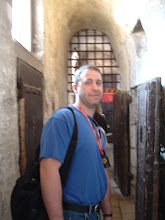
Wednesday, February 24, 2010

New Tattoo


Here is the new tattoo I got to commemorate the publishing of Shadow's Son:

Tuesday, February 16, 2010

2010 Pennwriters Conference

Hey folks,

Today’s post is about a local writers’ conference here in central PA. It’s hosted by the Pennwriters group, an organization to which I’ve belonged for a number of years. I don’t work for Pennwriters, but I feel that belonging to a group like this can provide many benefits for a writer at any stage of their career.

The Pennwriters conference is an annual event. This year it’s being held May 14-16 in Lancaster, PA. The conference features workshops (in many genres), discussion panels, a banquet, a costume party, and pitch sessions with editors and agents who are actively seeking new authors. This year’s keynote speaker is author James Rollins.

For more info, or to register, go to: http://pennwriters.com.

Thursday, February 11, 2010

A Funny Thing Happened . . .

Let me start by saying I don’t usually discuss political topics in public (I also try to avoid religion, the other third rail of social discourse). But something happened last night so alarming, so contemptible, that I feel compelled to speak out.

Last night, I answered . . . a phone survey . . .

ABOUT HEALTH CARE!

I know, I know. Jon, how could you be so stupid? In my defense, I was making good progress on my latest manuscript when the phone rang and I was feeling pretty magnanimous. So, instead of following my instincts (hang up), I indulged the surveyor. Health care? Sure, I’ve got time to answer some questions. What could be the harm, right? I’ve been meaning to email some congress-type-people about my views on this subject anyway, and maybe this survey will alleviate my conscience enough that I can continue to sit on the sidelines while others slug it out on my behalf. (To those who might wish to manipulate me in the future: appealing to my innate laziness is a good start.)

So Survey Guy starts firing these questions at me about my family’s health care. Who provides it? How happy are we on a scale of one-to-seven? One-to-seven? Um, okay. But as the survey goes on, I begin to notice a bit of a slant in the questions. They seem to want me to say that I’m happy with my health care the way it is and that I don’t want anyone to change it. But I wait it out, thinking surely there must be some question where I can give an answer that will definitively spell out my viewpoint.

Then it came. How happy am I with the cost of my health care? Aha! Now I can unload with both barrels, right? Well, wait. I ask Survey Dude, “Hey, Survey Dude, are you asking me if I’m happy with how much I actually pay out of pocket, or if I like what my wife’s employer has to shell out every year to keep us on the rolls?” It’s an important distinction because those two issues have very different answers. Survey Dude didn’t know. He read the question again and waited for my answer. I gave a middling sort of “slightly satisfied” answer that left me, sadly, unsatisfied. That ended the survey except for (wait for this) would I please give my name (sure), phone number (um, you called me, remember. But okay here it is), and my address. By this point I just wanted to get off the phone so I gave him what he needed. He thanked me and hung up.

No big deal.

Then I start thinking. Why did he need all that personal information? I wasn’t concerned about Survey Lad stealing my identity because those facts (name, phone, and address) are listed in the local phone book for anyone to see. Might there be another reason? Then I recalled something I had seen on TV where companies pretend to do surveys about health care, but what they are really doing is collecting names to put on anti-health care bill petitions, which they send to various congress-people-types in a ruse to make our government think that masses of people don’t want reform.

I’d been hoodwinked! And the worst part is I didn’t see it coming! (Thank you, Mr. Jim Carrey. Dumb and Dumber still makes me laugh.)

So take this as a friendly piece of advice. If Survey Dude calls your home or business with questions about health care, answer if you like, but do so with care because you don’t know what he is doing with the results.

I guess I could go on and trot out my personal views about health care reform, about how the current system is corrupt and has too many congress-type-people in its collective back pockets, or how it’s a crime what employers are forced to pay just to give their workers the security of basic health care, and how we don’t need a reform but instead a complete, top-to-bottom, scrub-behind-the-ears-with-steel-wool overhaul.

But the last thing the world needs is another windbag regurgitating his opinion into the ethereal winds of the blogosphere.

P.S.: A big thank you to my wife’s employer who very generously provides health care coverage for my family.

Monday, January 25, 2010

Reading the galley

Today I received the galley for Shadow's Son. For those not in the industry, a galley is a document showing how a manuscript will be laid out in book form.

It's both exciting and humbling to see how my novel will look when it's published.

Of course, there's work to be done. I'm reading the entire text from beginning to end in search of errors. When I send back the galley, the next time I'll see the book will be in printed form. Woo-hoo!

Friday, January 22, 2010

Writer Daddy

My life changed drastically sixteen months ago when my wife gave birth to our son. One of the things that changed the most (after learning that, yes, there is such a thing as five o’clock a.m. We had only seen it in movies before.) was my writing. Before our son arrived, I had a cushy schedule. You see, I only work weekends at my day job, so I usually had five days to myself every week. Pretty nice for an aspiring author!

It was this schedule which allowed me to write Shadow’s Son. I would wake up whenever the spirit moved me (usually around nine-ish), get something to eat, and then plop down in front of my computer. My daily quota was four pages of new text, but with six or seven hours to occupy, I frequently produced far more than that. The result was a brand new novel in about four months.

Fast forward to today. I still have the same work schedule, but now I have an added responsibility–our son. Because my wife and I don’t want to use daycare, I am Mr. Mom until mommy gets home.

Now I write in the evenings when the boy is asleep, which was a big transition for me. Having training myself to create in the morning and afternoon, it took me a couple months to make the switch to later hours. For a while I didn’t think it was going to work, but having a signed contract is a big motivation, so I stuck to it. Eventually, I got the hang of it, and now I’m back up to my daily quota.

In the shuffle, however, my wife lost something: her evenings spent with me. And this brings me to the real point of this post:

Writers, cherish your spouses!

They are the rocks that hold our families together when that deadline looms and you don’t have time to read “one more story,” or wash dishes, or any of the other million jobs they do while you’re busy creating new worlds. As for my wife, she is invaluable. She is wife, mommy, best friend, first editor, chef, seamstress, grocery shopper, and head cheerleader (and she has the pompoms to prove it, but I digress…) all rolled into one fantastic package.

To Jenny, my love. Thank you.

Friday, January 15, 2010

I'm currently reading . . .

Well, two books. The first is Ray Bradbury's Fahrenheit 451 to brush up for the Jumpstreet event this weekend (you can find details on my website www.jonsprunk.com).

I'm also about halfway through Deadhouse Gates, the second installment of the Malazan series by Steven Erikson.

There's not much I can say about F-451 that hasn't been said a thousands times before. It's both classic and strangely contemporary in its social commentary. If you haven't read it, I highly recommend taking a peek.

So far I'm really enjoying the Malazan series. Erikson delivers a rich, vibrant world simmering with dozens of conflicts major and minor. I've heard some criticism that his novels are difficult to read, but I haven't found that to be the case. Complex and intelligent, yes; difficult, no.

After Gates I will continue with the series (I bought Books 1-6 on a good deal from Amazon).

Tuesday, December 29, 2009

The Proposal

No, not the Sandra Bullock movie. Today we’re talking about manuscript submissions.

When you are submitting your work to an agent/editor, the packet will usually include: a cover letter, the manuscript (or a portion), and a synopsis. If you submitting cold (submitting to a professional who did not specifically ask for the submission), then you should check with their web site or a recent copy of Writer’s Market. Either source should give you the details on what that particular person/company wants.

Rule #1: Follow the guidelines to the letter. Sending something they don’t want, or omitting something they do want, is the best way to make sure your proposal is never read. Deviate at your own risk.


The Cover Letter

This is the first thing your target audience will see. It’s like a written handshake, and like a good handshake it should be firm, confident, and brief.

Here are the basics:

Greet the reader. Dear so-and-so (always triple check the spelling of the agent/editor’s name as a touch of respect). I usually start with a reminder about the meeting which sparked this submission, if there was one. If this is a cold submission (a submission sent to someone who hasn’t clearly asked for it), then obviously you skip that portion. So, something like, ‘We met Write-A-Pazuzza last month. You asked me to send you a sample of my novel.’

Define your book. Tell them the name of the novel, word length, and a couple sentences about it. If you’re having trouble pinning down your 600-page magnus opus in less than fifty words, go read the backs of a few of your favorite books. They typically introduce the main character and his/her main conflict, and possibly a mention of the impossible odds stacked against him/her. The trick is to make it sound interesting.

List your previous publications. This is where you list your best-received books, the bestsellers and award winners. What? You haven’t published any books before? Don’t worry. Being a newbie isn’t a sin. List some of the short stories you’ve had published and where they appeared. Don’t mention how much (or how little) you were paid. Just title, publication, and perhaps the date if it was recent. If you have none of the above, then skip this section.

Say goodbye, Ray. A polite ‘thanks for considering me’ followed by your signature is just fine here. Unless you and the agent/editor are actual friends in real life, resist the temptation to get too friendly here. This is a business letter, so keep it professional. Which brings us to . . .

Rule #2: Don’t get too familiar. Like I said before, unless you and the reader are friends already, don’t get cute. They don’t know you (yet), so don’t give them any reason to believe you are a potential stalker/psycho. No little hearts in the margin. No scented perfume. No pretty stationary with unicorns and moonbeams. Just white paper, black ink, and the facts, ma’am.


The Manuscript

I want to assume that everyone knows the basics like font, size, margins, numbering, and so forth. In case you don’t, there are about a zillion books on the subject. Here’s the basics: times new roman or courier font, size 12, one-inch margins all around, no right-hand justification (this means don’t have your word processor line up the right side of the text to mimic book printing), pages number in the upper right corner or at the bottom. If it’s not too much trouble, I suggest that you add a header to the top of every page that includes the title and your last name separated by a slash (Strangers on Mars/Sprunk).

Now, depending on what the agent/editor wants, you’ll either be sending them the complete full manuscript, or a partial. The full manuscript is self-explanatory. You print out the entire book, including prologues and epilogues, and shove it into a box or a big envelope. Wrap a big rubber band around the whole thing if you’re worried about the pages moving around and getting crinkled.

A partial is just what it sounds like, a portion of the manuscript. A lot of agents/editors ask for the first three chapters. Some ask for a certain number of pages, like the first fifty or one hundred. Either way, follow the directions. When asked for a number of pages, though, try to end the last page at a natural break of some sort, and not in the middle of a sentence. And if page 51 has the perfect break (end of a chapter or scene, big cliffhanger), then they probably won’t mind if you stop there.

I’ve been asked before if you should send the prologue along, too. That’s up to you. Is it exciting and full of delicious tension? Is it vitally important to the story? If so, put it in. If not, then I have to ask why is it even in the manuscript?

Before you print out the manuscript or partial, take a little time for go over one of the most important parts of the submission, perhaps THE most important: the first five pages. Obviously, check to eliminate typos and grammar mistakes, but also read for content. Some professionals claim they can tell within the first couple pages if they’ll like a book (some will admit in private that it takes a lot less than that). So go over the beginning again. Does it have the right tone? It is clear? Does it leave you wanting more? Not every novel will (or should) start off with a murder in a famous museum in the opening scene, but you can still aim for something memorable.


The Synopsis

Here’s a little secret. I hate writing synopses. It feels like I’m trying to take everything that I put into a book, all the emotion and tension, all the angst and heartbreak, and squeeze it into a space that would fit on the back of a soup can. But just about every agent and editor wants one with the submission package, so we just have to suck it up. Hey, maybe you’ll love the experience. If so, dig in.

A synopsis is, in a nutshell, a summary of your novel. Professionals used to ask for longer synopses of ten or more pages. These days, most ask for three to five pages, or even less. Everyone is busy today. Editors don’t have time to read a novella-sized summary of a novel. They want the bare bones. They want to know if the author can put together a story from start to finish.

Beside length, synopses have other specific traits:

They are written single-spaced and in the present tense, no matter what tense your novel is in. So, instead of “Captain Bill broke free of the black hole’s gravity, and steered a course for Epsilon Five,” the synopsis would say, “Captain Bill breaks free of the black hole’s gravity, and steers a course for Epsilon Five.”

The important contents of a synopsis are setting, character, motivation, action, and results. Tell them what the characters are doing, where they’re doing it, why they’re doing it, and what happens next.

If there are specific things about your book which you feel separate it from similar stories, you can slip it in. Does your book deliberately cross genre (a vampire love story set in outer space)? Is your protagonist different from the typical hero? (She should be!) How about the villain?

After the first draft, go back and add some polish. I don’t know if a stellar synopsis ever sold a mediocre novel, but that’s no reason to look sloppy. Add a little pizzazz. Although it’s a summary, you can inject your unique voice into the text. But don’t go overboard. Just a dash is all you need.


Well, that’s about it. I hope this was helpful. The key to publishing, in my humble opinion, is perseverance. It’s not enough to write prolifically or even beautifully; you have to get your work out to where the right people can see it. Good luck!