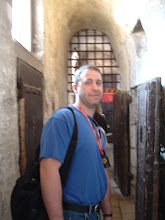
Today we're proud to have Eddie Schneider, agent at the JABberwocky Literary Agency, to answer some questions about the Biz.
How did you become an agent? Was that always what you wanted to do?
It all started, one peyote-fueled night in the desert...
Really, I moved to NYC with the vague notion I might want to be an editor, and got an internship at another literary agency, which quickly divested me of that notion. Agents can have more leeway to work on their hearts' desire than editors, and as I read pretty widely, that appealed to me.
Take us through a typical day in the life of a New York agent.
A typical day starts with a meticulously laid plan, which is tied up neatly in a bow and then tossed out the window. Inevitably we wind up working on surprises that come up, which can occupy more time than they ought. But isn't every job like that?
More specifically, during the day, an agent might: Negotiate a contract; nag a publisher on an overdue payment or correct a royalty statement that has been subject to creative accounting; discuss changes to the title/cover of a forthcoming book; box up twenty pounds of books to ship to subagents in Germany or Thailand; curse at the foolishness of the latest publisher to reject a book they would pay $100,000 for, if they had any sense. Then after business hours, on weekends and holidays, we get to work on the fun stuff: Reading, editing, looking for new clients.
What makes a manuscript stand out to you? And what can authors do to improve their chances of impressing an agent?
What makes a manuscript stand out most to me are two things. The quality of the writing (#1), and the ability of the storyteller to immerse me (#2).
The second part is easy. Write well, and we'll be impressed.
The problem, of course, is getting from a place where you have the burning desire to write a book, to actually being good at it. It's like playing football in that regard. Lots of kids grow up wanting to be a pro quarterback or a linebacker, but a tiny fraction make it to the NFL.
Those that do, make it because they worked harder than anybody else they went to school with, followed that up by working harder than anybody else they went to college with, and followed that up by working harder than the other rookies in training camp.
As Jon mentioned in an earlier blog post, it's a huge help to have a writing group. To keep this metaphor going, having someone else who knows what they're doing look at your writing is like sitting down with the quarterbacks coach and going over game tape. You'll learn a lot, which you can apply to your next performance.
Work hard, keep trying to improve your game, and you'll give yourself the best possible shot at being a professional author. No one's going to just give you that QB slot, or that publishing contract, just because you have heart.
What is the usual process for presenting manuscripts to editors? Are those stories of three-hour work lunches really true?
These days, we usually e-mail them after talking with editors. Changing over to e-mail from physical manuscripts wasn't good for the bicycle messenger industry, but it was for the environment.
As for those lunches. If only the urban legends of the three-martini lunch were true! We do have lunches, and they can sometimes run long, but it would be rare for one to go on for three hours. Both editors and agents' lives are too hectic for that, at least in the US.
Are you actively seeking new clients? And what kinds of books are you looking to represent?
Yes! I'm looking for YA and adult fiction, specifically sf, fantasy, and literary fiction. I'm also looking for science, history, and narrative nonfiction. For more detail, visit http://awfulagent.com/agents.
Our submission guidelines are here: http://awfulagent.com/submissions-2
Please note that the agency has re-opened to submissions, so don't be shy.
---------------------------------------------------------------------
Thank you, Eddie. If you folks have any additional questions for him, post them in the comments and I'll bug him for an answer.
--Jon
Monday, June 6, 2011


Saturday, June 4, 2011
ARC Winner
Congratulations to Jeff Timmers of Denver, Colorado -- our winner in the ARC giveaway contest.
And thank you to everyone who entered. I received a much bigger response than anticipated, which makes me think I'll have to do this again for the next book.
Enjoy, Jeff!
And thank you to everyone who entered. I received a much bigger response than anticipated, which makes me think I'll have to do this again for the next book.
Enjoy, Jeff!
Wednesday, June 1, 2011
Guest Post by Lucienne Diver
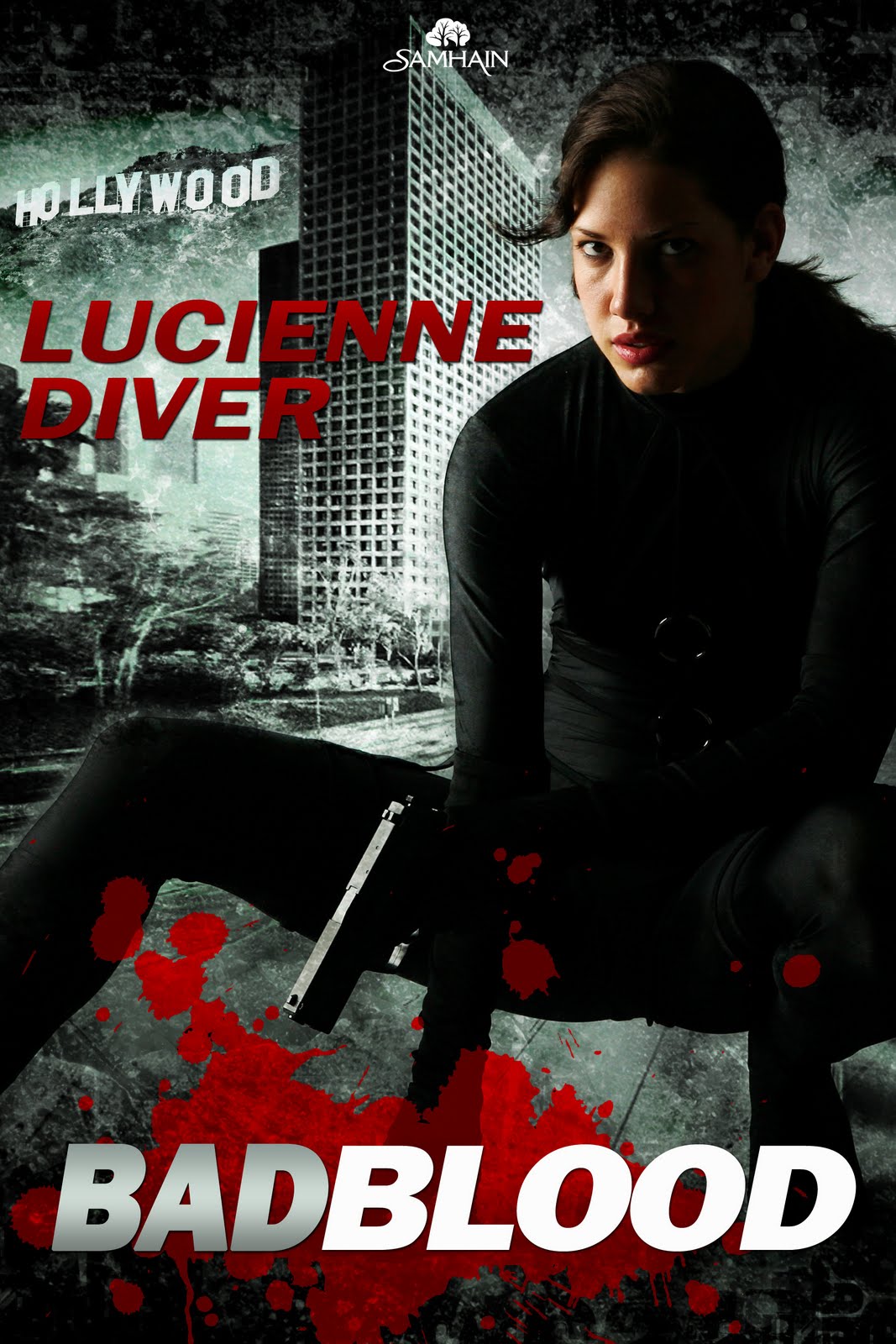
Lucienne Diver is a super-star agent and writer. We're honored that she stopped by today.
How Novels are like Children
- You give birth to the idea. It’s shiny and new, so beautiful you can’t look away.
- You’re responsible for its nurturing and development. Without your time, attention, love and support it will never reach maturity.
- Inevitably, there will be crap. You clean all that away when you revise, rewrite, polish .
- It hurts like h-e-double-hockey-sticks when someone criticizes your baby.
- Any accolades are a source of immense pride.
- Your baby will have other influences, like educators who come in the form of teachers, critique partners, agents and editors.
- No matter what your plans are for them, they’re likely to frustrate you by going off in unanticipated directions.
- Ultimately, you get very little say in what they wear (wardrobe/cover—same difference).
- Eventually, you have to let your child off into the world and to succeed or fail on his or her own. In book terms, this is called the submission process.
How Novels are Different than Children
-They won’t hit you up for college funds, though networking at conventions, hiring a publicist, etc. may cost you just as much.
-They won’t move back in with you. Oh, wait…that’s called rights reversion.
-Unlike children, you can get them to open up to you anytime. And you can read them like—look at that!—a book.
-They’re much more translatable—French, Polish, Hungarian, as opposed to text and teen speak. (OMG, BFF, LMAO.)
-They’re easier to keep track of. You can put them on a shelf and they’ll stay there. Authorities tend to frown on that when you do it with children. (Have to give my husband credit for this one.)
Of course, novels also won’t cuddle up to you, melt your heart, give you bouquets of weeds and call them flowers, and make you watch really bad movies, like Transformers 2. But a new release is every bit as nerve-wracking as sending your child off to school for the first time. You can’t be there to protect him from teasing and other forms of torment. You can’t hold his hand, explain, apologize, or otherwise ease the way. You have to let go. And never let them see you panic.
My new baby? Bad Blood, a novel of Latter-Day Olympians (urban fantasy).
Due date? Digitally - June 28, 2011, print in 2012 from Samhain Publishing
Siblings? Vamped and Revamped (young adult vampire series) from Flux Books
Tuesday, May 31, 2011
Balticon Wrap-Up
This past weekend was my first Balticon (in Baltimore, MD). I had a blast. It's very much a writers and readers convention, with some big names and plenty of smaller, regional authors like yours truly.
Everyone was very friendly, as if usual for a SF/F con. One of my agents, Joshua Bilmes, was also there, and it was great to soak up some free meals from him. I also met Elizabeth Moon for the first time. She's much friendlier than you'd think a big-time author would be.
Also there was Myke Cole, who shares an agent with me, and who's debut novel, Control Point, comes out next February. Myke is a great talent, and we had several great conversations.
If you live in the region, you should really check out this con.
Everyone was very friendly, as if usual for a SF/F con. One of my agents, Joshua Bilmes, was also there, and it was great to soak up some free meals from him. I also met Elizabeth Moon for the first time. She's much friendlier than you'd think a big-time author would be.
Also there was Myke Cole, who shares an agent with me, and who's debut novel, Control Point, comes out next February. Myke is a great talent, and we had several great conversations.
If you live in the region, you should really check out this con.
Monday, May 30, 2011
Shadow's Lure is Here
Looks like some stores are receiving copies of Shadow's Lure.
This is the sequel to Shadow's Son, continuing the story of Caim the Knife and his ethereal friend, Kit.
"Searching for the truth behind the murder and disappearance of his parents, Caim discovers a land in thrall to the Shadow. But there are some things a son of the Shadow cannot ignore, and some fights from which he can’t run. In this battle, all of Caim’s strength and skill won’t be enough. For none can resist the Shadow’s Lure."
This is the sequel to Shadow's Son, continuing the story of Caim the Knife and his ethereal friend, Kit.
"Searching for the truth behind the murder and disappearance of his parents, Caim discovers a land in thrall to the Shadow. But there are some things a son of the Shadow cannot ignore, and some fights from which he can’t run. In this battle, all of Caim’s strength and skill won’t be enough. For none can resist the Shadow’s Lure."
Saturday, May 21, 2011
Win an ARC!
I have one advanced reading copy of my new book, Shadow's Lure, to give away. Unfortunately it won't be signed (because it's coming straight from the publisher), but them's the breaks.
Just email me at messages@jonsprunk.com before midnight on June 3rd to enter the giveaway contest. I will draw the winner on June 4th. Good luck.
Just email me at messages@jonsprunk.com before midnight on June 3rd to enter the giveaway contest. I will draw the winner on June 4th. Good luck.
Friday, May 6, 2011
Meet Lou Anders

Lou Anders is both the Editorial Director and the Art Director for Pyr Books, which means he's a god in the fantasy world. (Or at least a demigod.) It also means he's busier than any one person has a right to be, so we're very honored that he took the time to sit down and answer some tough questions from Yours Truly.
Tell us a little about yourself. How did you become the Editorial Director at Pyr Books, and what exactly do you do?
Well, my background was in theatre (London and Chicago), journalism and screenwriting (Los Angeles), and dot com startups (San Francisco), before I started working in 2001 as a freelance anthologist. In 2004, Prometheus Books hired me to help them build a science fiction and fantasy list and here, seven years later this March, we are. As to what I do—that’s a complex question and a long answer. As Editorial Director, I’m both acquisition’s editor and art director, and sort of a “buck stops here” on a lot of other aspects of book production. I would try to summarize by saying I select all manuscripts (with the aid of my editorial assistant and slush reader), edit the manuscripts (but we also have excellent copyeditors), select which artist to put on the cover (we have magnificent artists), art direct said artists (again), determine which of our three in house designers will do the design (we have three wonderful designers), oversee/art direct the design, oversee the interior layout (also a wonderful person), work with the (wonderful) people in production, publicity, sales & marketing, etc… in the creation and promotion of the book. I also travel about seven or eight times a year speaking about our line at conventions, to libraries, etc… I wear about a half dozen different hats, but that is not to diminish the efforts of the score and a half or more people at the parent company that work on every Pyr title. But basically, I mostly push emails back and forth between departments while trying to carve out a few precious minutes at the close of each workday to actually, you know, read.
We know you read a lot of manuscripts. What makes a story stand out to you? And what does it feel like when you find a book you want to publish?
People think that reading submissions is reading a sea of unpublishable dreck. But what it actually means is reading a sea of work that is “just okay.” And therefore just as unpublishable. That final yard between okay and “unputdownable” is the longest one. It’s the hardest to quantify or explain, but it’s that quality, which you know the instant you are in it, that makes a manuscript stand out for me. Very often, I’ll be reading something and when my wife asks about it and I start to reply, she’ll hear the lack of enthusiasm in my voice before I do and say, “Put it down; you don’t like it. Move on.” It’s the manuscripts that have me leaping out of my chair to hound her with that I offer on, the ones that excite me and won’t let me sit still. Basically, I acquire the manuscripts that thrill me, which answers the second part of your question – thrilling! Seriously, when I discover a new author, or read a new manuscript from an established pro, I cannot shut up about it.
What is your “perfect” query letter? Any insider tips for our readers?
Don’t put too much stock in query letters. I’ve bought several manuscripts now whose query letters were laughably bad (and had prepared me to expect an equally bad manuscript). I only take agented manuscripts (and our slush reader’s submission guidelines are posted on the contact form of our website, www.pyrsf.com) but I’d say that my preferred query is an email (not a snail mail) from an agent (not an author) that summarizes the book in a paragraph or two and does NOT include the manuscript if I haven’t asked for it. After seven years, I have a pretty good idea what works and doesn’t work for us, so I can tell from a query whether I’m interested and save us both time. All this being said, I do remember one query that simply said something to the effect of “I loved Joe Abercrombie and I write similar fantasy to him.” But, alas, that trick only works once! (But it is the reason we established guidelines for unagented submissions. Thanks, Jon.)
Glad to be of service. What is your perspective on rejections? What can writers learn from them?
Sadly, I don’t have time to give feedback when I pass, so there isn’t really anything to be learned directly from me in a rejection. However, I’d say the first thing to bear in mind is that all books are not for all people, and thus, not for all editors. If an editor, or an agent for that matter, passes on a book, that only means it isn’t for them, not that it isn’t a good book or that it might not appeal to a different reader. Now, if rejections are starting to pile up over and over, it might be worth asking yourself why and addressing that.
Those who follow your social media sites might know that you’re also a writer. Does that change how you approach editing another writer’s work?
Well, Lou the fiction writer isn’t yet a working professional, unlike Lou the editor and Lou the former journalist. I’d say that it’s the reverse—that editing for over a half decade has radically improved my writing.
How do you approach matching artists and artwork with a book?
This is very much something that arises from my gut. I start to see the cover in my mind before I am halfway through a book. In fact, visualizing the cover is one of the things that I look for as a sign to myself that I am interested in a manuscript. It’s rare for me to get to the end of a manuscript and not already have the illustrator in mind. I think I’m privileged to be both editor and art director and to be able to bring a knowledge of the manuscript to bear on the cover, which is something some art directors don’t have the luxury of doing, just due to time and publication constraints. But working with the artists is one of the most rewarding aspects of this job.
With the recent rise of e-books and online publishing, where do you think the industry is heading in the next five years?
I think “death of publishing” reports are grossly exaggerated while the predictions about the demise of print books may be conservative. In other words, I think that ebooks are accelerating beyond even the wildest predictions and could easily be the dominant (not sole) form of book in five years, but that it will still be publishers who are producing and selling 80% - 90% or more of the commercially successful content in the ebook world. As with any time of change, there are going to be a lot of shakeups and a lot of opportunities. But ebooks are a pain in the butt to produce – or rather, ebooks are a pain in the butt to produce well, and a recent survey found that less than 2% of the book buying public sighted social media as the way in which they made title selections. So I think there is still going to be a role for publishing to play, not just as in being arbiters of taste (though that’s a very important job), but in terms of the actual production and marketing of books, whether they are print or electronic.
I want to thank Lou again for spending some time with us. I hope it's been enlightening. Those who want to hear of Lou's thoughts can follow the blog on the Pyr Books website.
Subscribe to:
Posts (Atom)